 MERCEDES-BENZ Tech
  |
||
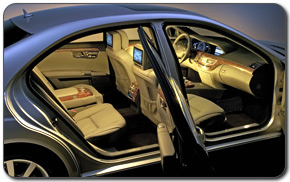 Accident Avoidance System Accident Avoidance System Reduce Rear Collisions by up to 75 Percent! revolutionary safety system that can reduce rear collisions by up to75 percent. The next evolution of Mercedes-Benz accident avoidance, the latest PRE-SAFE uses two complementary radar frequencies to detect vehicles up ahead, warn of a likely impact and prime the braking system for faster response when the driver brakes the car. In addition, the front seat belts are tightened during the valuable time just before a possible impact, and seats move to positions that provide better protection – measures that have been part of the highly praised S-Class PRE-SAFE system since its debut in 2002. The latest version also closes the side windows to provide better support for the window curtain air bags, and can inflate special seat cushions that provide greater lateral support for occupants and help the side impact air bags provide even greater protection when they deploy. Testing Shows New PRE-SAFE Reduces Rear Collisions by 75 Percent. The new PRE-SAFE uses an enhanced version of the Mercedes-Benz Brake Assist system that can not only supply full-power braking assist in emergencies as soon as the driver applies the brake pedal, but also continuously measures the distance to the vehicle ahead and adjusts brake pressure if the driver doesn’t brake hard enough. In extensive tests conducted by Mercedes researchers using 300 drivers, PRE-SAFE reduced rear collisions in heavy city traffic by 75 percent! During testing, data recorders and video cameras documented more than 400,000 real-world kilometres covered by 200 drivers in the U.S. and Europe, while 100 drivers participated in months of intense testing on the DaimlerChrysler driving simulator in Berlin. Two Radar Beams Stay on the Alert The newest PRE-SAFE system uses two very different radar beams to scan traffic in front of the car. Newly developed short-range radar with a frequency of 24 gigahertz sweeps the first 33 yards in a fan-shaped 80-degree pattern, working in tandem with a narrower nine-degree beam of longer-range 77-gigahertz radar (already used for the car’s optional Distronic cruise control feature). The two radar frequencies complement each other to cover a full range of more than 160 yards – more than 1½ football fields. The integrated system can identify if the car is gaining quickly on vehicles driving ahead, and it decides whether to sound a warning, ready the Brake Assist system or trigger other PRE-SAFE measures. The system is designed to monitor other moving vehicles ahead and doesn’t recognize or react to any stationary objects. Safety Systems with "Reflexes" Mercedes-Benz actually initiated the idea of anticipatory measures some time ago. In model year 1990, the SL roadster was first equipped with an automatic roll bar that pops into position in a third of a second if the car senses an impending rollover. Currently both the CLK Cabriolet and the SL are equipped with such an anticipatory system, while the SLK features two stationary roll bars. The initial development of PRE-SAFE was based on the findings of Mercedes-Benz accident researchers, who concluded that about two-thirds of all accidents are preceded by driving events that indicate the possibility of an impending crash, such as skidding, emergency braking or a sudden evasive maneuver – all of which can provide valuable seconds of advance warning before impact. |
||